Resources
RGB vs CMYK: What’s the Difference?
When working with digital design and print materials, designers often encounter two main color models: RGB and CMYK. Understanding the difference between them is essential to ensure colors appear correctly on screens and in printed products.
What Is RGB?
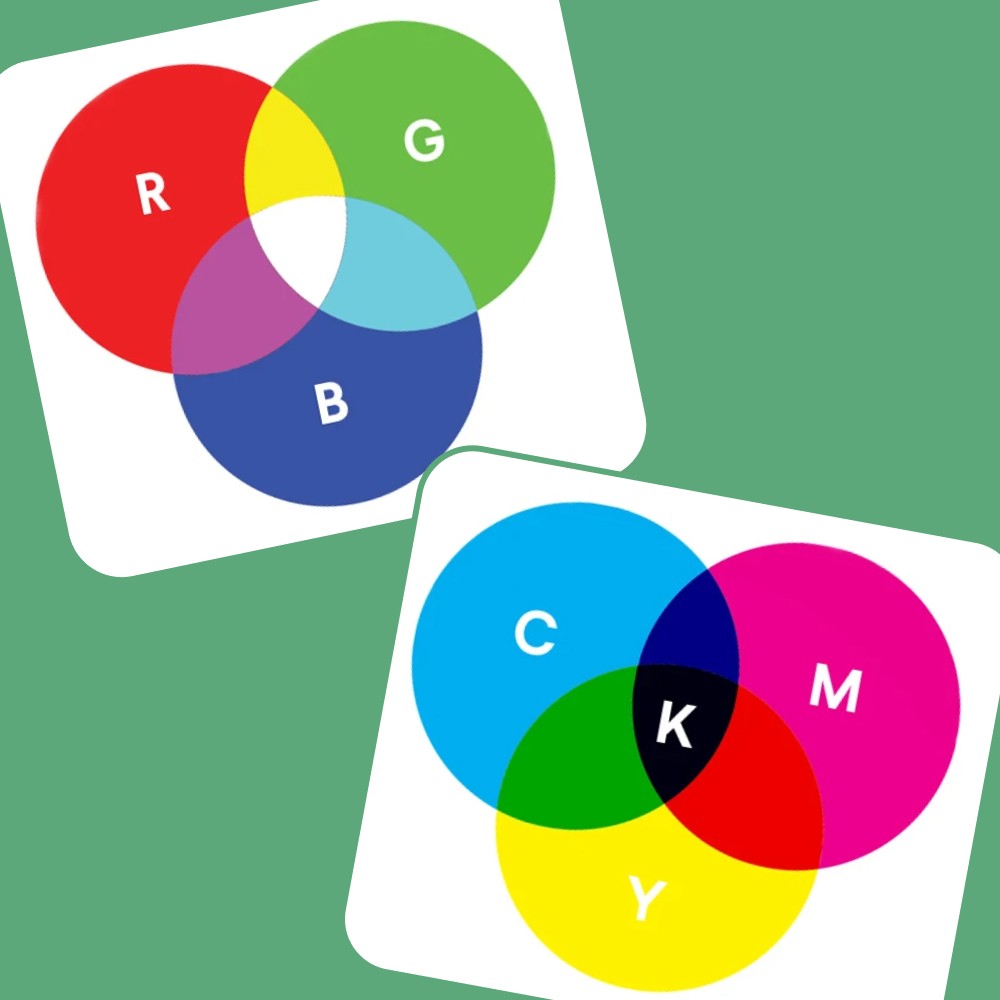
RGB (Red, Green, Blue) is a color model used for digital displays such as computers, smartphones, and televisions. It works by mixing red, green, and blue light in different intensities to create colors.
When these three colors are combined at full intensity, they produce white light. Because RGB is based on light, it can display very bright and vibrant colors. This is why RGB is the standard color model for websites, mobile apps, social media graphics, and other digital content.
What Is CMYK?
CMYK (Cyan, Magenta, Yellow, Key/Black) is the color model used in printing. Instead of light, it uses ink to create colors on paper.
Printers combine cyan, magenta, yellow, and black inks in different amounts to reproduce images. Since ink absorbs light rather than emitting it, the range of colors that CMYK can produce is smaller than RGB. As a result, some bright colors seen on screens may appear slightly less vibrant in print.
When to Use Each Color Model
Designers should choose the color model based on the final use of the design.
Use RGB for websites, apps, presentations, and social media graphics.
Use CMYK for brochures, posters, business cards, packaging, and other printed materials.
More Projects






Resources
RGB vs CMYK: What’s the Difference?
When working with digital design and print materials, designers often encounter two main color models: RGB and CMYK. Understanding the difference between them is essential to ensure colors appear correctly on screens and in printed products.
What Is RGB?
RGB (Red, Green, Blue) is a color model used for digital displays such as computers, smartphones, and televisions. It works by mixing red, green, and blue light in different intensities to create colors.
When these three colors are combined at full intensity, they produce white light. Because RGB is based on light, it can display very bright and vibrant colors. This is why RGB is the standard color model for websites, mobile apps, social media graphics, and other digital content.
What Is CMYK?
CMYK (Cyan, Magenta, Yellow, Key/Black) is the color model used in printing. Instead of light, it uses ink to create colors on paper.
Printers combine cyan, magenta, yellow, and black inks in different amounts to reproduce images. Since ink absorbs light rather than emitting it, the range of colors that CMYK can produce is smaller than RGB. As a result, some bright colors seen on screens may appear slightly less vibrant in print.
When to Use Each Color Model
Designers should choose the color model based on the final use of the design.
Use RGB for websites, apps, presentations, and social media graphics.
Use CMYK for brochures, posters, business cards, packaging, and other printed materials.
More Projects
Resources
RGB vs CMYK: What’s the Difference?
When working with digital design and print materials, designers often encounter two main color models: RGB and CMYK. Understanding the difference between them is essential to ensure colors appear correctly on screens and in printed products.
What Is RGB?
RGB (Red, Green, Blue) is a color model used for digital displays such as computers, smartphones, and televisions. It works by mixing red, green, and blue light in different intensities to create colors.
When these three colors are combined at full intensity, they produce white light. Because RGB is based on light, it can display very bright and vibrant colors. This is why RGB is the standard color model for websites, mobile apps, social media graphics, and other digital content.
What Is CMYK?
CMYK (Cyan, Magenta, Yellow, Key/Black) is the color model used in printing. Instead of light, it uses ink to create colors on paper.
Printers combine cyan, magenta, yellow, and black inks in different amounts to reproduce images. Since ink absorbs light rather than emitting it, the range of colors that CMYK can produce is smaller than RGB. As a result, some bright colors seen on screens may appear slightly less vibrant in print.
When to Use Each Color Model
Designers should choose the color model based on the final use of the design.
Use RGB for websites, apps, presentations, and social media graphics.
Use CMYK for brochures, posters, business cards, packaging, and other printed materials.